Five strangers emailed me in three weeks this November, selling five different things. All five opened with a line from my company's website, three of them repeating the same three words from it, and all five closed by offering to send over "a few short ideas."
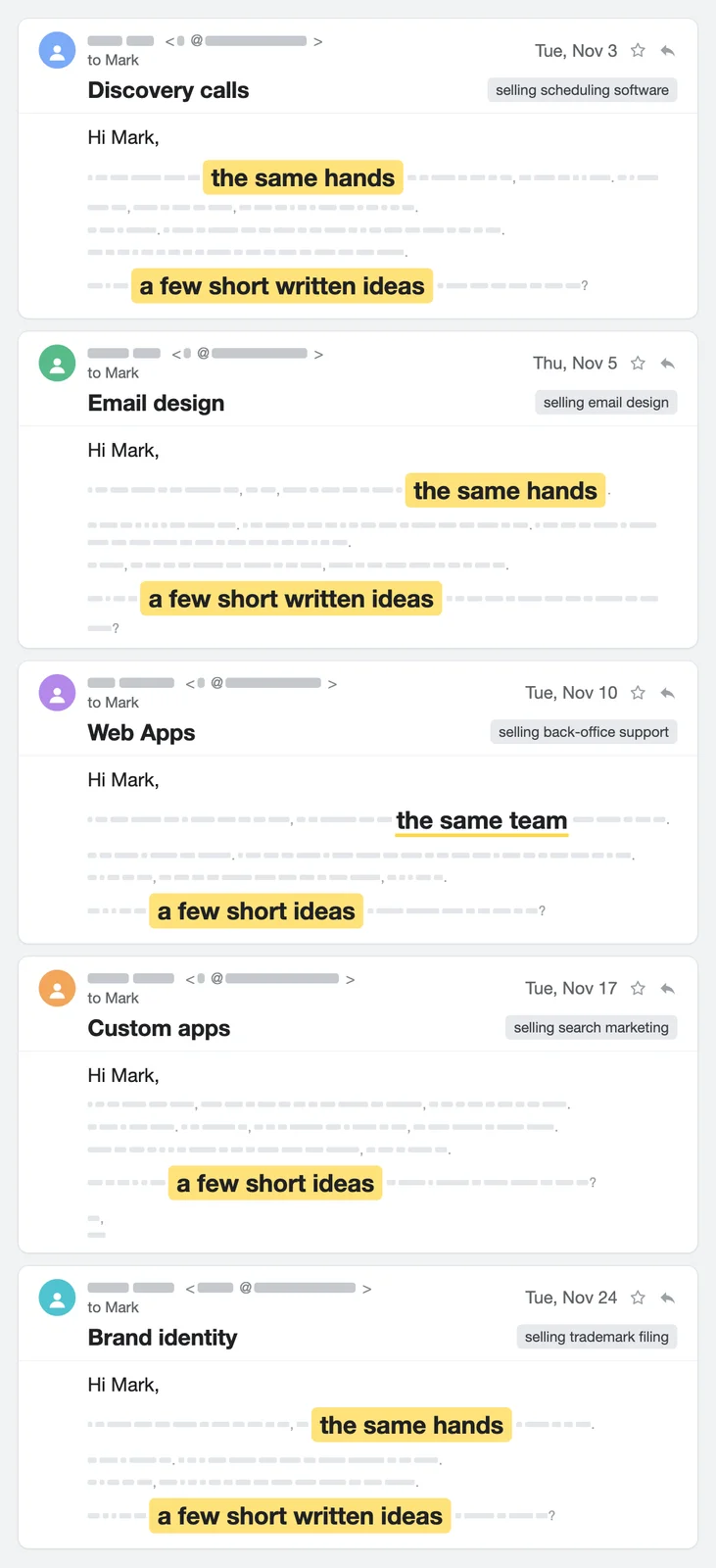
A line like that used to be a sign that someone had read your website. Now software can write it, and the companies that sell the software say so openly. One widely used tool gives its customers a ready-made instruction for its AI: visit the website and "create a personalized 1st line." In one of my five, the sender's company was given as "I am an email marketing expert," which is the kind of mistake a template makes and a person doesn't.
If you own a business, here are three signs that you're looking at one.
It opens with something from your own website, listing, or reviews. Nothing in it goes beyond what is already public about you.
The address it came from doesn't match the company named in the message. The same tools tell senders to use a second domain so that spam complaints don't hurt the one their business runs on. That is standard practice and not proof of a scam, but it does mean you're reading campaign mail and not a personal note.
It ends on a small, easy question. The same company's advice on getting replies says the first message "should be a light ask," and the trade's reasoning is simple: a stranger who won't give up time for a meeting will still answer a question that costs nothing. The reply is the foot in the door, and the real ask comes after it.
Some also leave out a street address and a way to opt out, and US law requires both in any sales email.
What to do with one: don't reply, and don't click anything in it, not even an unsubscribe link, because the tools record which links get clicked. Use your mail app's Spam button, which is what the FTC suggests for email you didn't ask for, and save Unsubscribe for lists you actually joined.
The same pitch now shows up in website contact forms, too, where software fills in the form with a message built from your own site. An "inquiry" that only describes the sender's services gets the same treatment.
There's one more reason to know the pattern. Everything in that opening line is public, and so are the names of your customers, your staff, and your vendors. A message that mentions someone you know proves nothing by itself, so check with that person before acting on anything it asks.