If you've ever run sound at a wedding, you already know this part. If you haven't, here's the crash course. The gear is the relatively easy part. The cues are what get you. A song has to start the moment a door opens, at the right volume. It has to fade, not stop, when someone reaches the front. Then comes the next one, and the one after that, in front of everybody, with no second take. You spend the day staring at a screen. You're at the wedding, and you miss it.
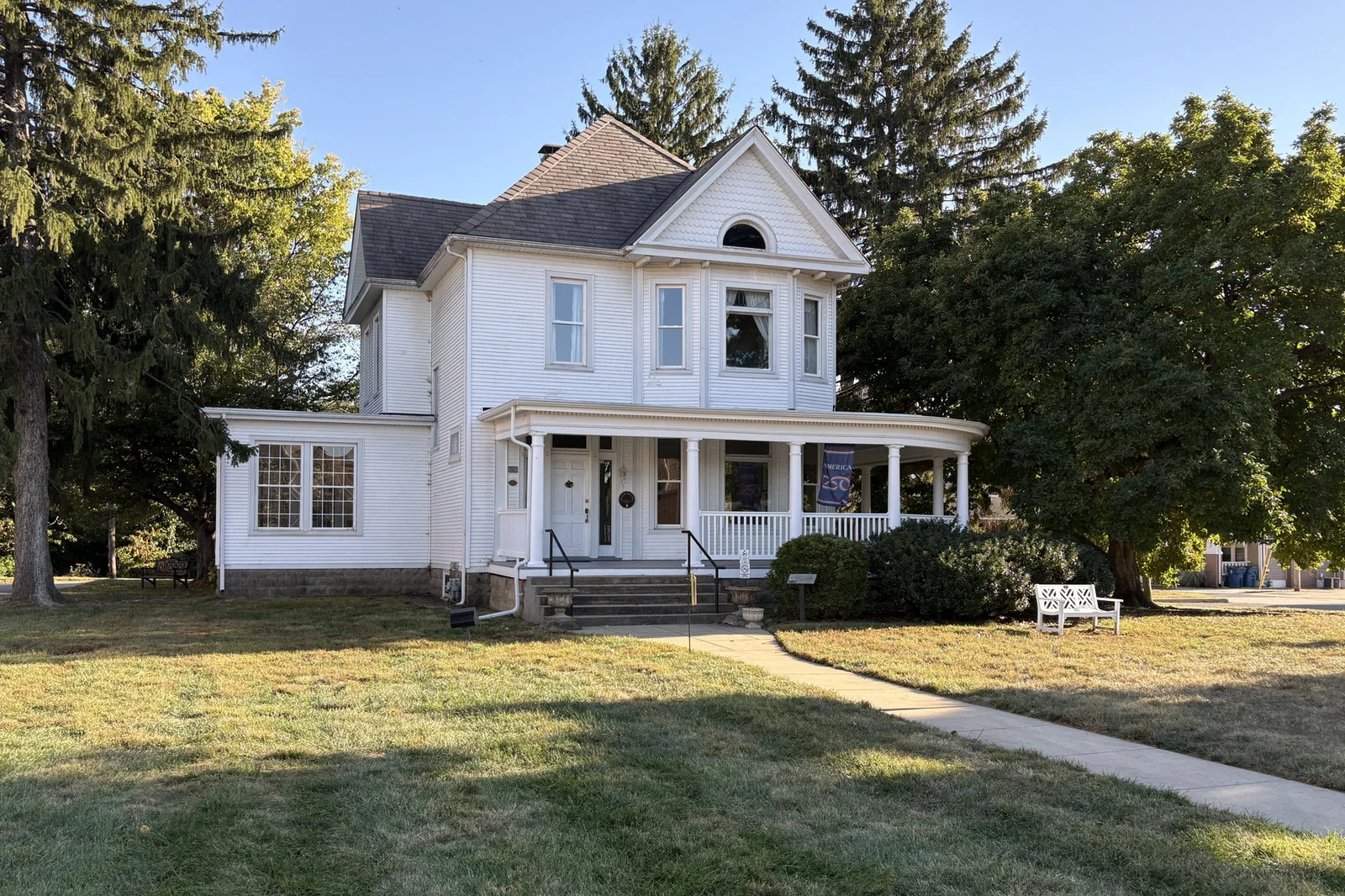
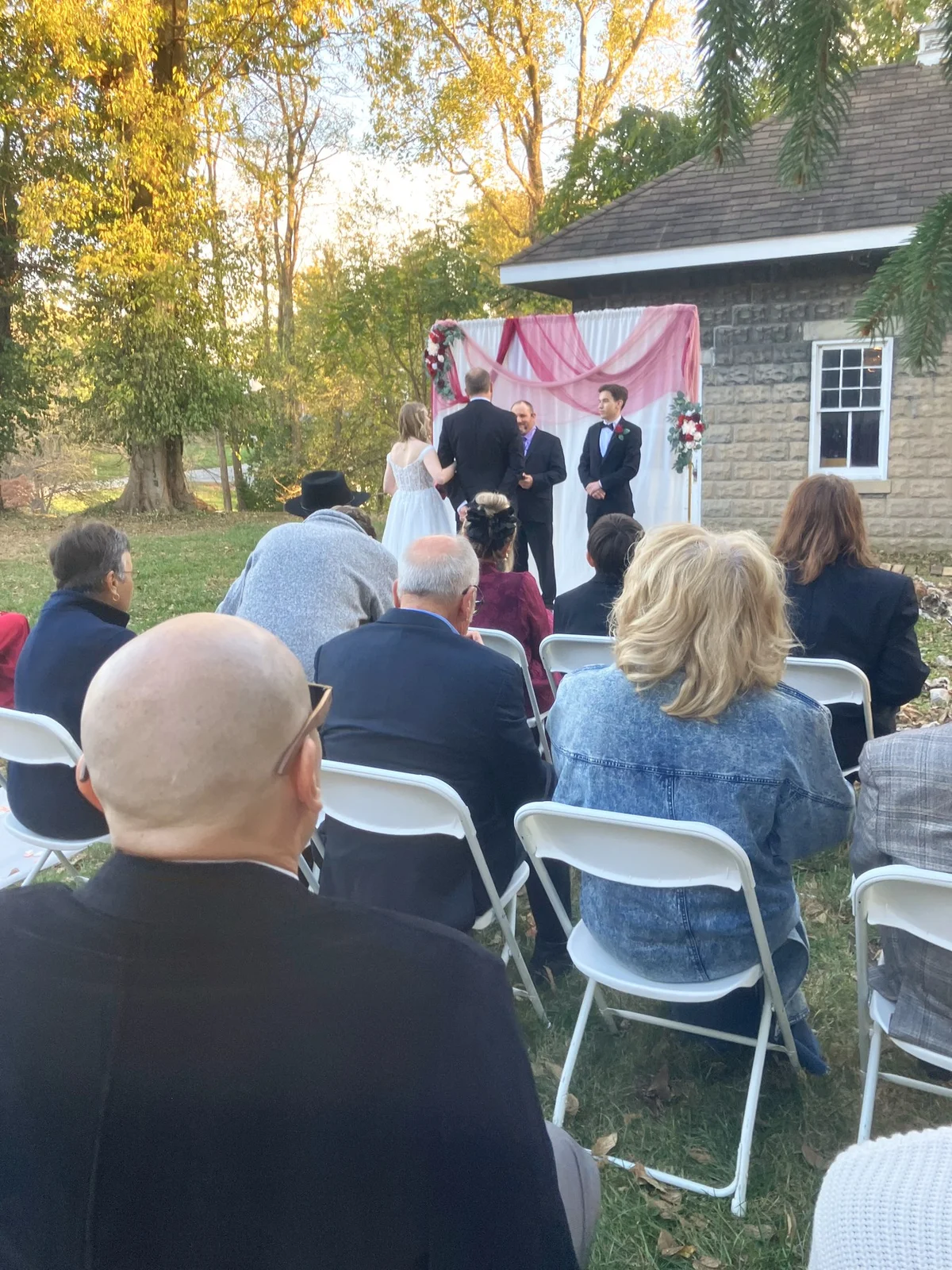
That could have been me, at my own son's wedding. Johnny married Savannah on Saturday, November 7, on the back lawn of the Blum House in Collinsville, Illinois, with about forty people in folding chairs. The sound, the music, and the picture on the wall were mine to handle. At a wedding that small, there was no trusted assistant to hand them to. I also wanted to watch my son get married.
So I hired my own company. Rendered got the job and one rule: nobody sits behind a mixing board. The day had to run from the phone in my pocket, from a seat in the front row.
Here's what Rendered built. If you've been the one at the laptop, you'll recognize every problem in it.
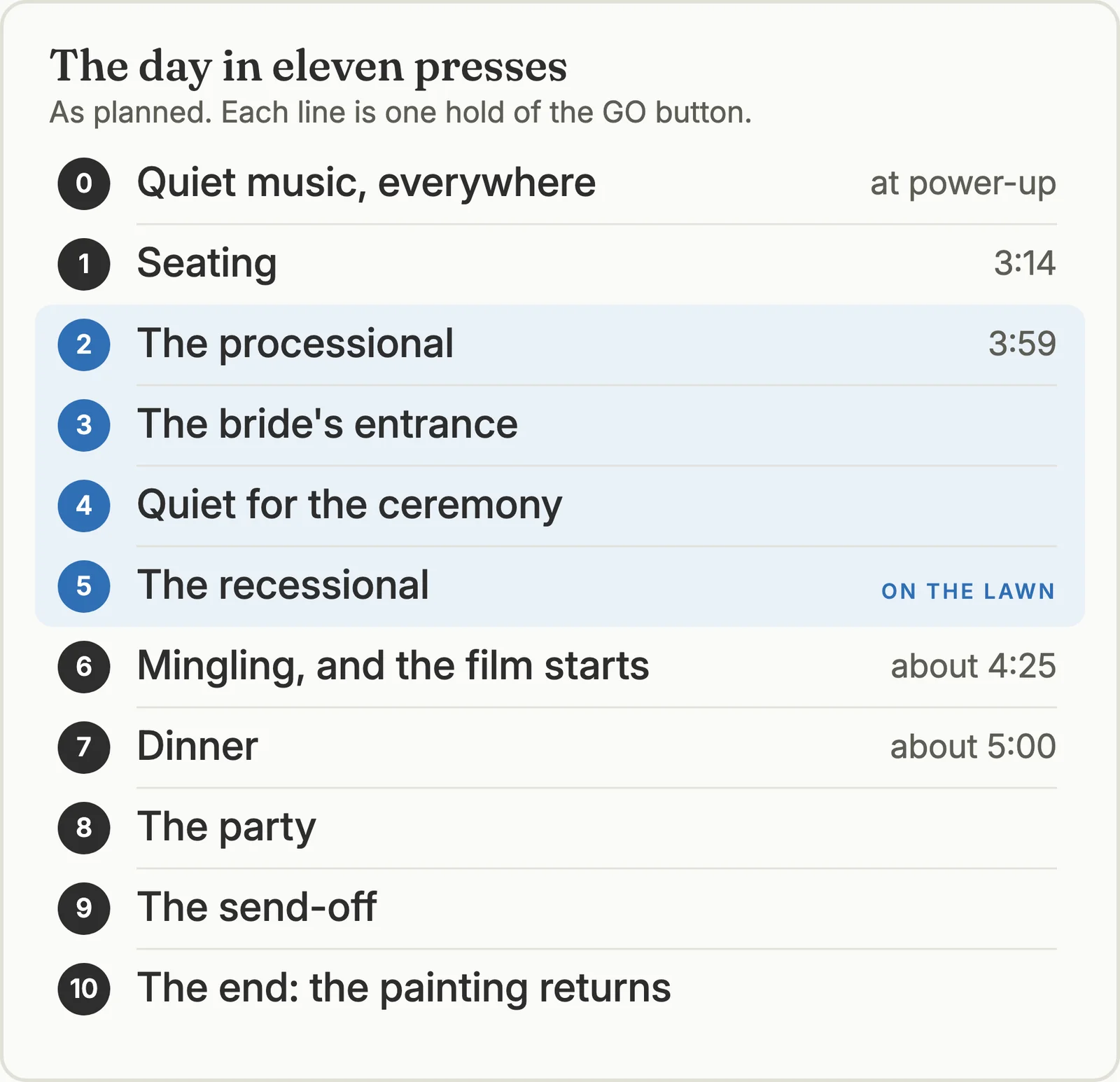
The list. First, the day got written down. Not the gear, but the moments: setup, guests finding their seats, the groom's entrance, the bride's entrance, the vows, the walk back up the aisle, mingling, dinner, the party, the sparkler send-off, and the end. Eleven of them.
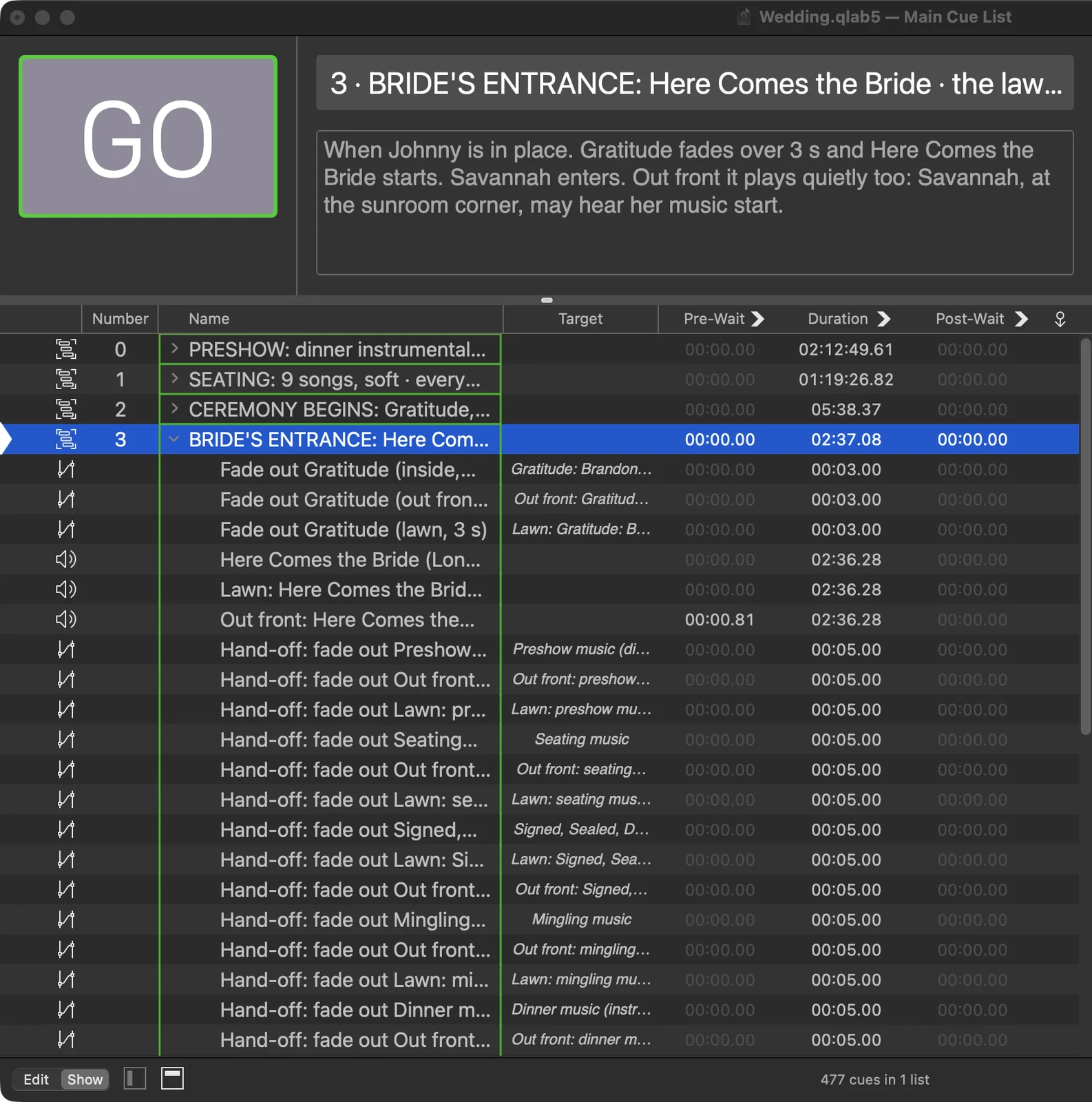
Then a small program built the show from that list in QLab, the software theaters use to run their cues. Every song was leveled to match the others. Every fade was written out. Every moment knew which speakers it belonged to: the music for the groom's entrance played on the back lawn and nowhere else. The bride's entrance alone was 27 cues: her song in three places, and a fade for anything still playing. Eleven moments came to 477, and nobody made one of them by hand. When the plan changed, it was a one-line edit, and the program rebuilt the rest.
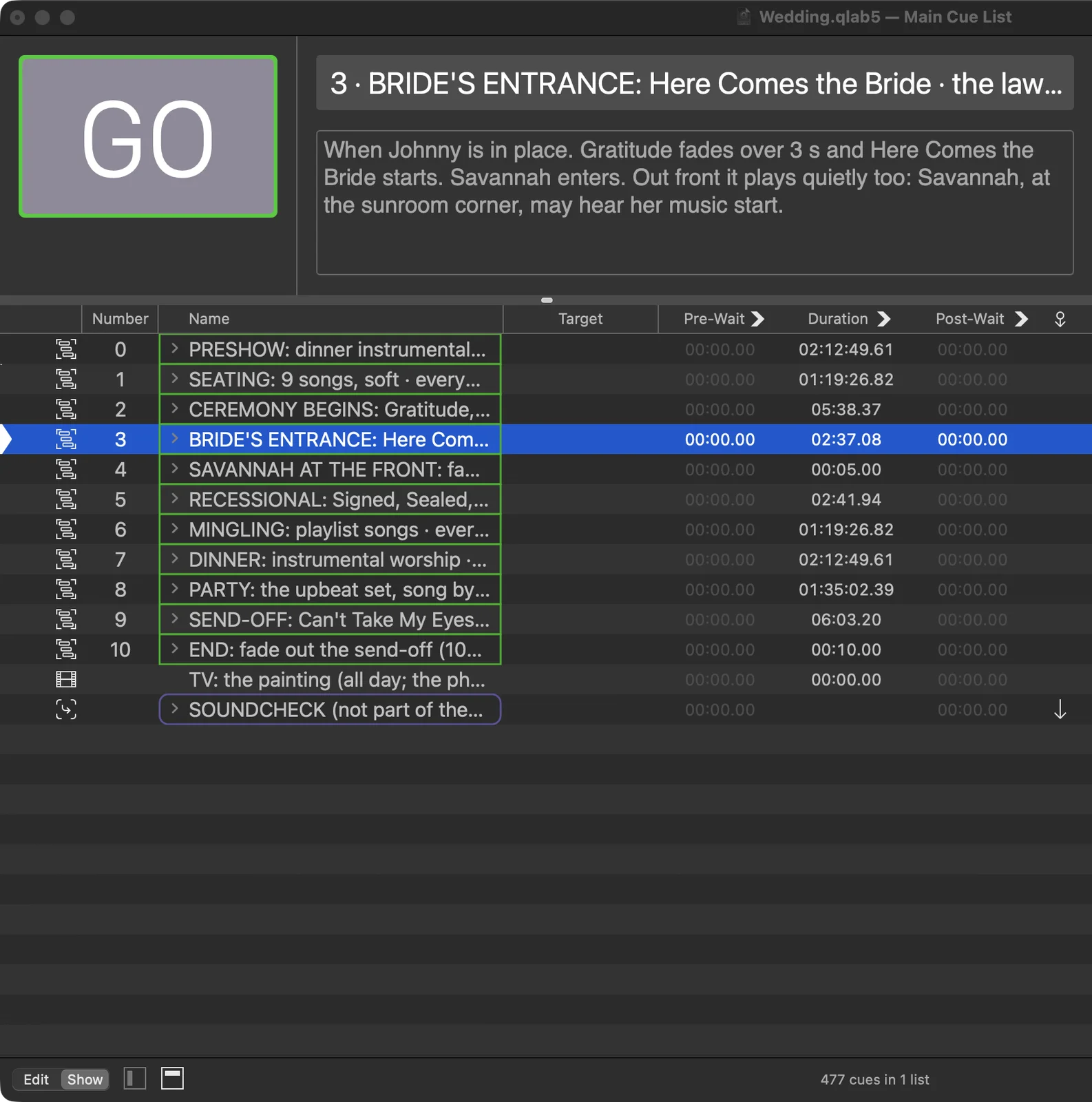
One button. On the day, each moment was one press of a button marked GO. The phone showed what was playing, what GO would start next, and when to press it: "on the officiant's signal," or "when Savannah reaches the front." I pressed. The seating music faded over five seconds, and the entrance music started on the lawn.
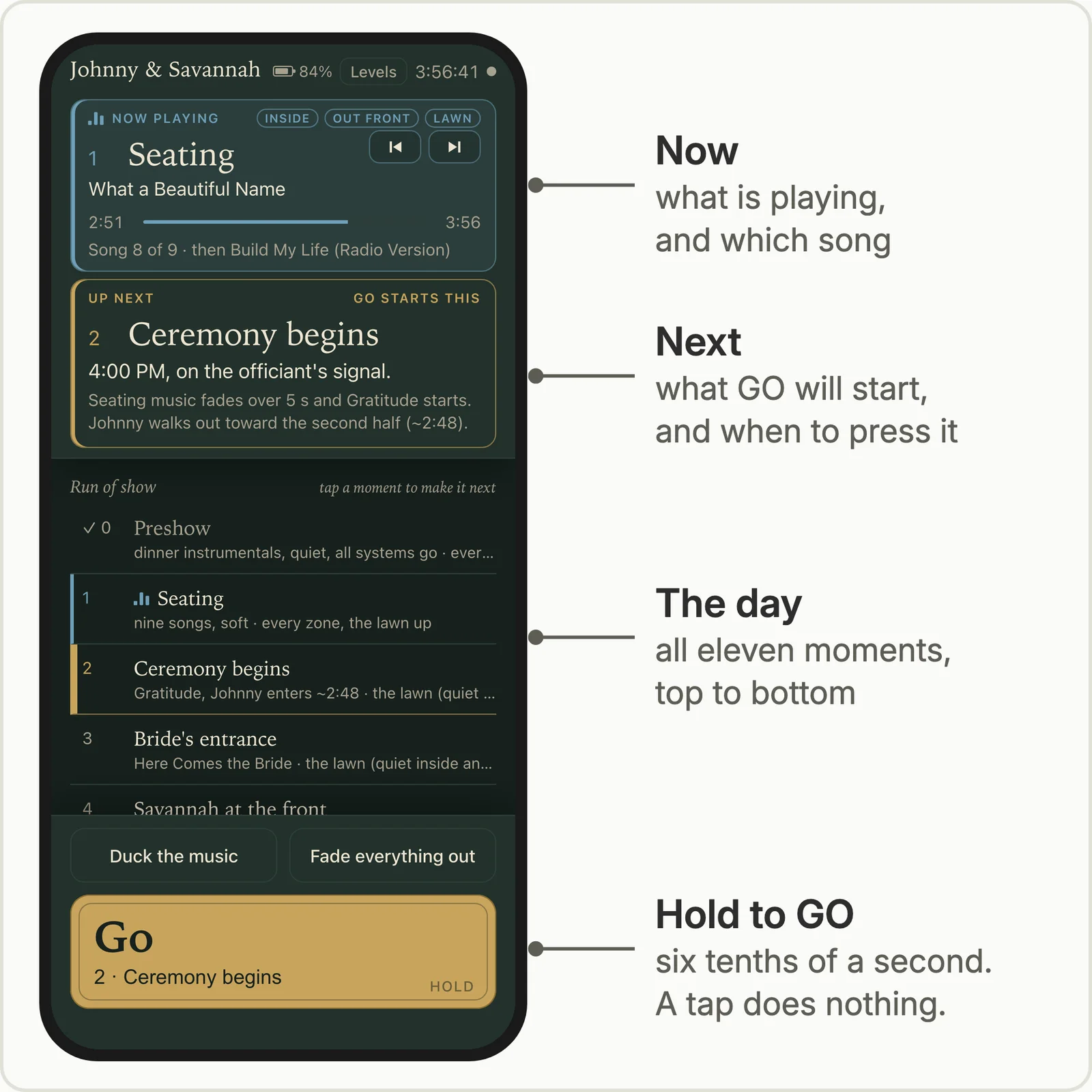
Hold, don't tap. The phone lived in my pocket, so every button that changed the sound had to be held: six tenths of a second for GO. A tap did nothing. A slide did nothing. After a GO the button locked for a second and a half, so a nervous thumb couldn't fire two moments in a row. If the day went off script, I could tap any moment in the list to make it next. One more button dipped the music under whoever was speaking. That one was for the toasts.
Here's what all of that was for. The job that has you staring at a screen was finished before the first guest parked. What was left was a list and a button, and the list said when. I could have handed the phone to anybody who can be trusted with one button. I kept it, sat down in the front row, and saw the whole thing.
Three places, one beat. One laptop fed three places at once: every room of the house, the front porch and walk, and the back lawn. Inside, seven small Bluetooth speakers linked together and spread through the house, most of them on window sills and a mantel. Set right on the sills, they got the building itself resonating with the low end. Out front, hidden behind the bushes, were two wedge monitors, the slanted floor speakers you see at a singer's feet, at the far end of a hundred feet of cable. On the lawn were two fifteen-inch speakers on poles.
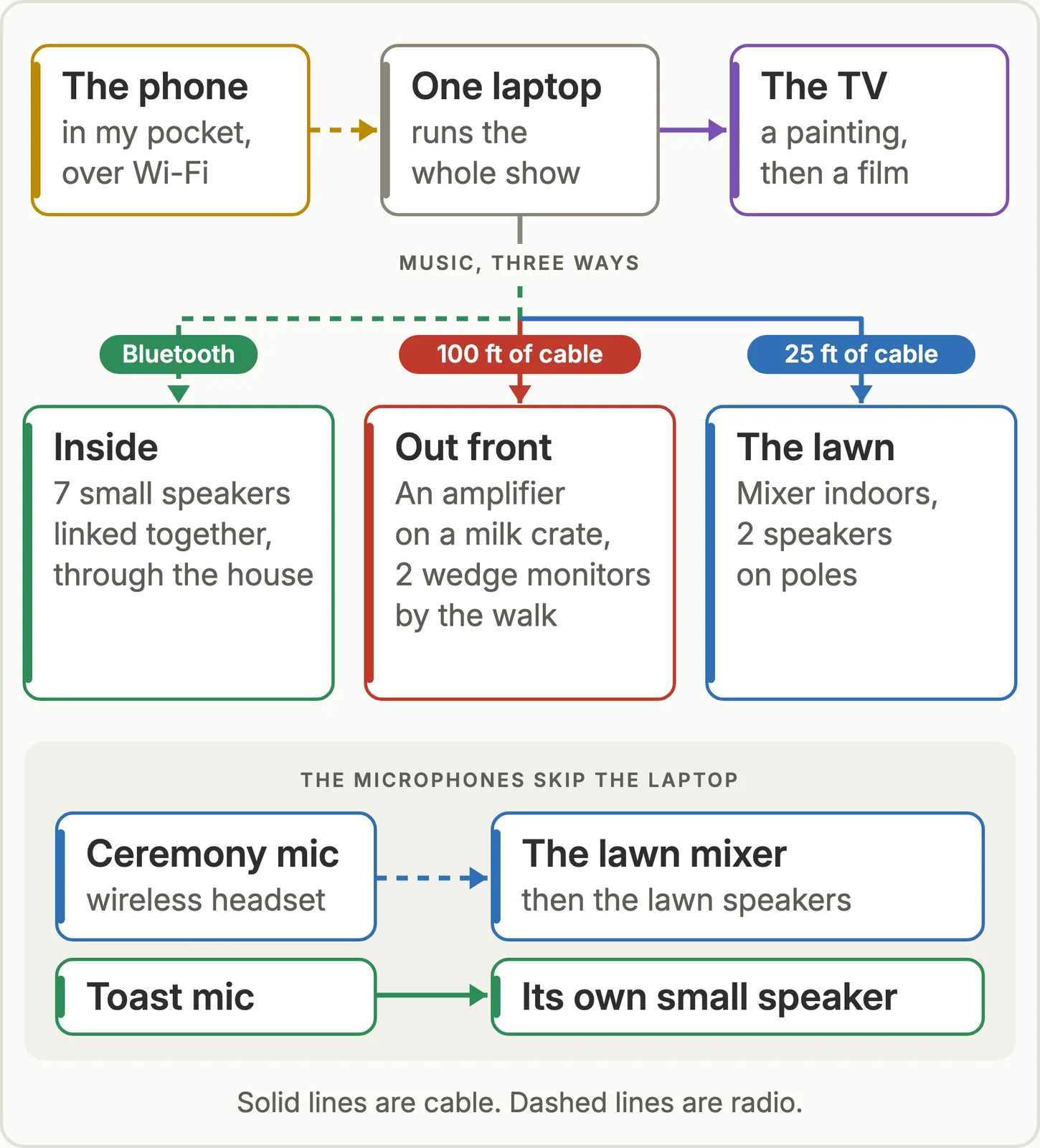
A Bluetooth speaker plays about eight tenths of a second behind a wired speaker. Stand in a doorway between the two and every song has an echo. So wherever a wired speaker could be heard alongside them, it waited 0.808 seconds before it played, and every speaker on the whole property landed on the same beat. Rendered measured that time delay with a click track, well before the day. You don't want to discover that for the first time at the venue.
The mics. The microphones never touched the laptop. The ceremony mic went straight to the lawn's own mixing board and speakers, and the toast mic had a speaker and amplifier of its own. If the computer had died in the middle of the vows, everyone would still have heard the vows. And the morning before the wedding, Rendered caught one of the wireless channels parked on the same frequency as a St. Louis TV station, and moved it. No software would have caught that. Leaving a person free to check is what the automation was for.
The wall. The Blum House has a 65-inch television beside the fireplace, between two brass sconces, exactly where a painting would hang.
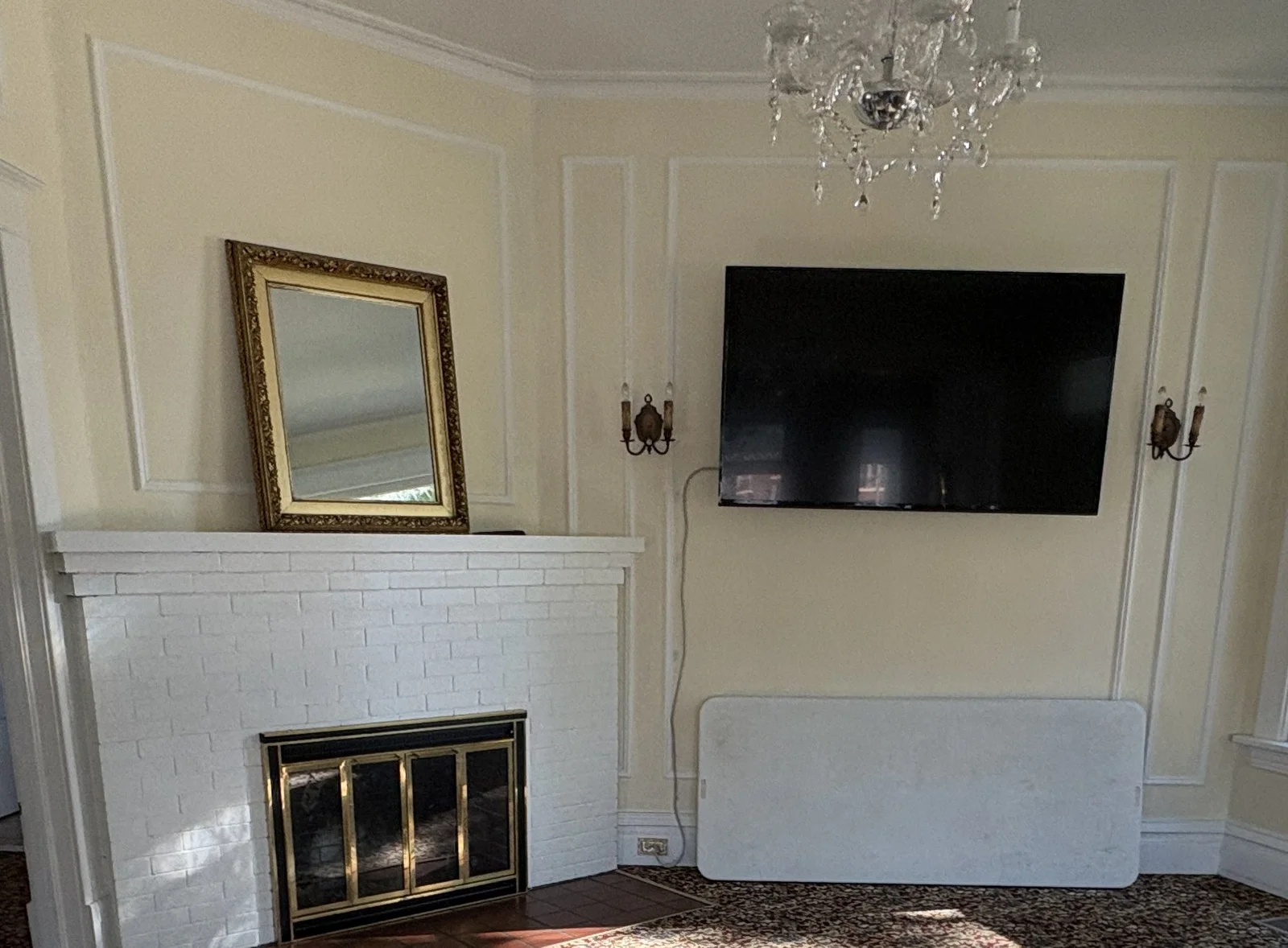
So for the day, Rendered made it one: Martin Johnson Heade's magnolias, from the Art Institute of Chicago's open collection, in a gilt frame with a small brass plaque.
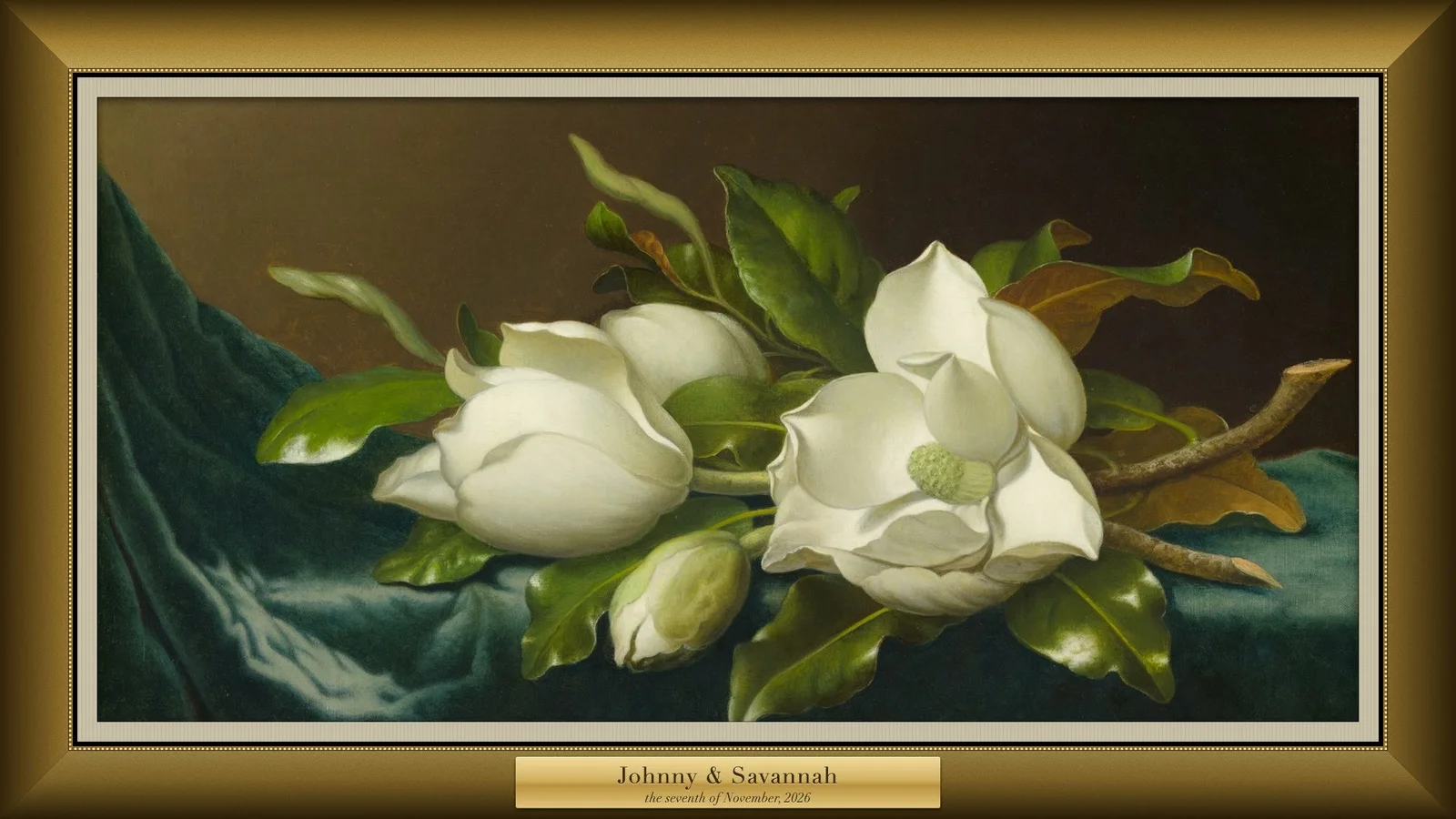
After the ceremony the painting gave way to a film in the same frame: 202 slides of the two of them growing up, side by side at the same ages, each with its caption engraved on the plaque.
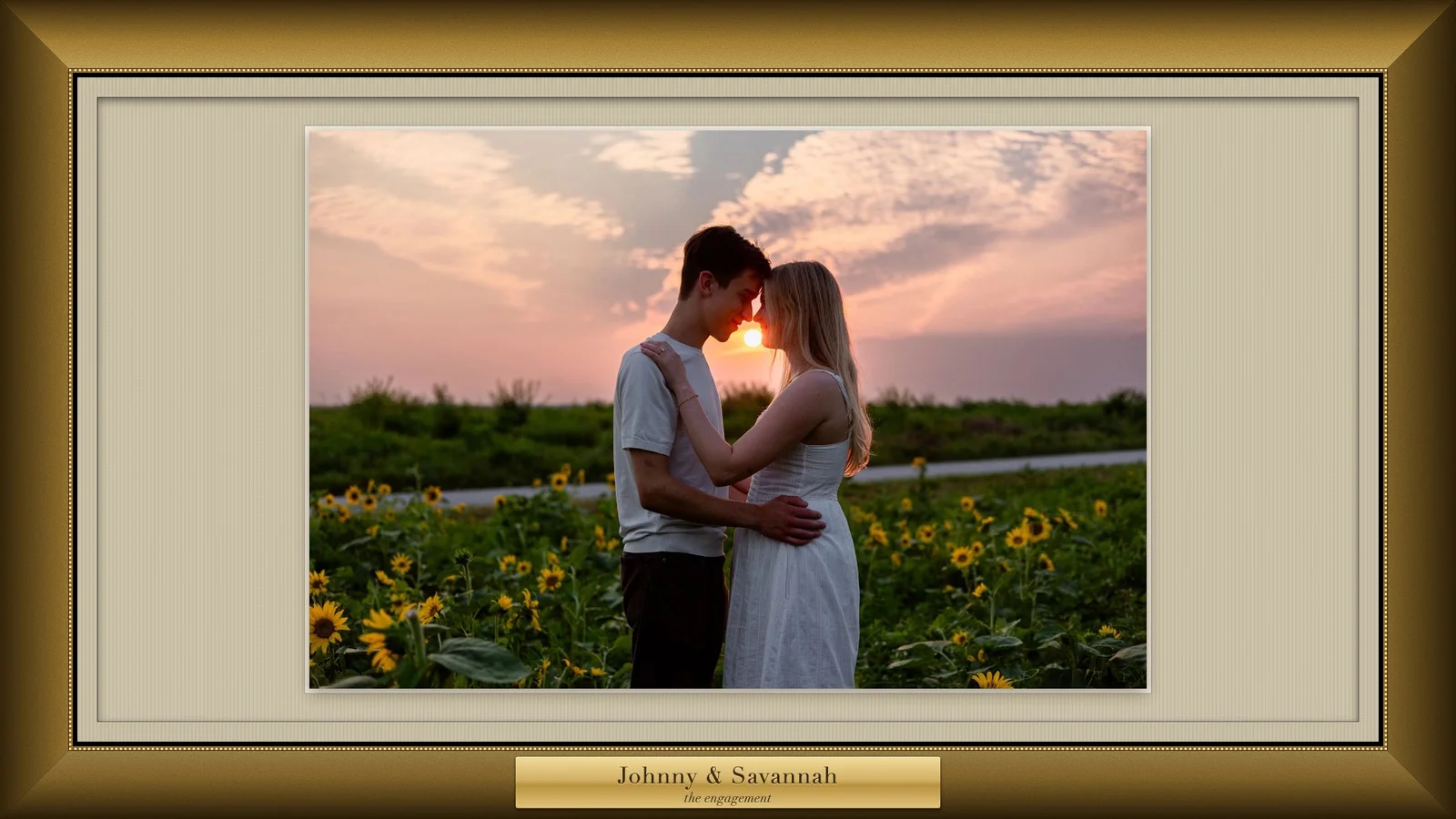
What it is. None of this is an app, and there's nothing to download. Rendered built it for one Saturday at one house: one QLab file, a handful of small programs, and one web page, alongside a dozen wired and wireless speakers, and about seven hundred feet of cable.
That's Rendered in a single Saturday: sound, picture, and software, built around one real problem.
None of the ideas are secret, and they travel well beyond weddings. Write the plan down before you touch any equipment. Let a computer turn the plan into the hundreds of small steps, so nobody builds them by hand. Make the important button hard to press by accident. And keep the one thing that can't fail away from the thing that might.
Almost none of this was visible from the chairs, which was the idea. I saw my son and my new daughter-in-law get married from the front row.
The next time you're the one running the sound, I hope you get to look up.
Have a day that has to go right, or a problem nothing off the shelf solves? It doesn't have to look anything like this one. Tell Rendered about it.